


SpeedCash: Play & Earn Money
4.41.47K Reviews
App Specs
- Version
- 1.4.2
- Updated On
- License
- Free
- Downloads
- 100,000+
- Developer
- Leaps Gaming
- Categories
- Entertainment
- Platform
- Android
Screenshots
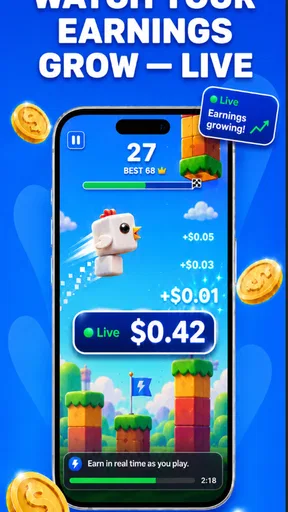

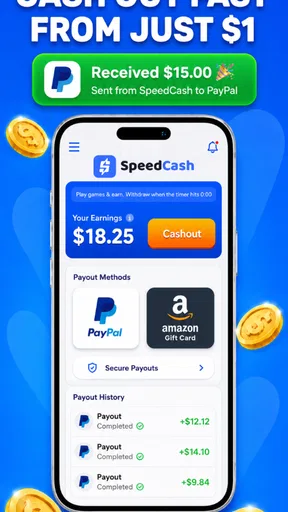
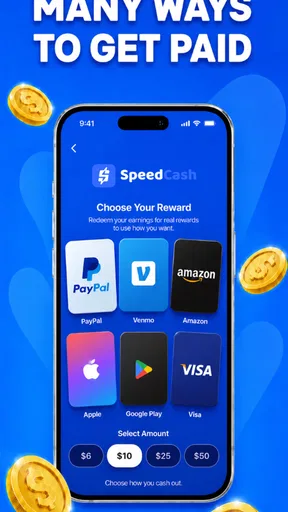
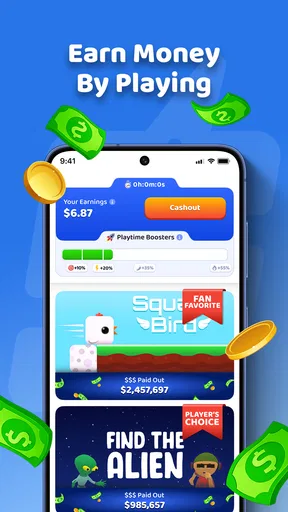
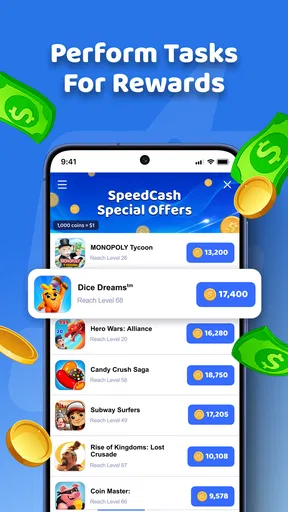
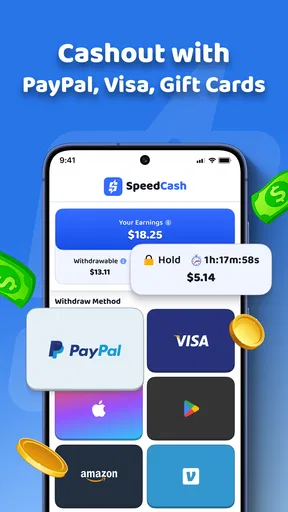
 Analysis by AppCompare
I approached SpeedCash: Play & Earn Money as an entertainment app rather than as a serious income tool. Its basic idea is easy to understand: spend time with selected games and work toward cash or gift-card rewards. That promise makes it appealing during spare moments, but the experience is more useful when you treat it as a rewards-based pastime, not a replacement for paid work.
What stood out to me first was the need to judge the app on two levels. There is the entertainment side, where the goal is to discover games and keep playing, and there is the practical side, where you need to understand progress, reward conditions, and whether the effort feels worthwhile. Those two sides do not always serve the same person equally well. Someone who enjoys trying mobile games may find the process motivating, while someone looking for a quick, predictable payout may become impatient.
How clearly the app guides you through earning
SpeedCash comes from Leaps Gaming and sits in the entertainment category. It is free to use, carries a Mature 17+ rating, and runs on Android 7.0 or later. The app reached the store on December 6, 2024, and version 1.4.1 is the version I considered here. Its public reception is encouraging at a 4.4 average from around 6.6 thousand ratings, with more than 100 thousand installs, although those figures should be read as signs of interest rather than proof that every user has the same experience.
The central navigation concept is less complicated than a traditional finance app. You are not opening it to manage a bank account or build a budget. You are opening it to look for game opportunities, choose something that interests you, and track the reward path connected with that activity. That narrower purpose helps the app feel approachable, especially for a first-time user who might find cashback platforms or survey services cluttered with unrelated sections.
For me, the most important readability question was not simply whether the words were legible. It was whether the app could make the difference between playing for fun and playing toward a reward clear enough. Reward apps can become confusing when promotional language is more prominent than the practical conditions. I would take time to read each offer carefully before starting, rather than assuming that opening a game automatically guarantees a reward.
That habit is especially useful for people who process information slowly or who find dense screens tiring. I prefer to pause at the beginning, identify the game, understand what action is being counted, and only then commit time to it. This is a better workflow than tapping quickly through several screens and trying to reconstruct the rules later. It also reduces the chance of spending an evening on a game that does not suit your interests or your patience.
The app’s entertainment focus can work well for users who dislike the pressure of competitive gaming. You do not need to approach it as a leaderboard challenge in order to see its appeal. A quiet player can choose a familiar style of game and use the reward goal as a small extra incentive. At the same time, anyone who expects a detailed dashboard comparable to a dedicated financial service should adjust expectations. SpeedCash is built around game-based rewards, so its usefulness depends heavily on how comfortable you are interpreting that format.
Worth Reading Before You Choose

EA SPORTS FC Mobile 26 Is a Bigger Football Game, but It Takes Time

Flipboard Shows What News Apps Must Do Beyond the Feed

Switching to Android Auto Means Rethinking Your Driving Routine

Google Calendar Makes a Crowded Week Easier to Manage

Ludo King Makes the Most of the Minutes Between Plans

Baby Panda World Brings Quick Play to Modern Phones, but Its Game Library Feels Busy
Making the first session easier to follow
I would recommend beginning with one offer rather than jumping between several. This is a small but important accessibility choice: fewer simultaneous goals mean less visual and mental switching. It also makes it easier to notice whether your progress is being recognized. If you have attention difficulties, memory limitations, or simply a busy day, keeping one game in focus gives you a clearer reference point.
Another practical step is to read the reward wording when you are alert, not when you are rushing to fill a short break. A person with low vision may want to enlarge system text or use the phone’s built-in reading tools where available, but the usefulness of those tools will depend on how the app presents its interface. I would not assume that every label or reward condition will be equally comfortable to read with assistive settings, so checking the first offer carefully is sensible.
The app is also easier to understand when you separate three questions: what game do I want to play, what progress is expected, and what reward am I working toward? Keeping those questions distinct prevents the common mistake of treating the reward headline as the whole agreement. This workflow is one of the more valuable ways to use the app because it turns a vague promise into a personal decision about time and enjoyment.
Motor, visual, and sensory considerations during play
SpeedCash itself may be simple to browse, but much of the actual experience takes place inside other games. That matters for accessibility. The physical demands, pace, sound design, text size, and control layout can change from one game to another. Someone who has difficulty with rapid taps, precise swipes, small targets, or sustained hand movement should judge each available game separately instead of assuming that the rewards app makes every option equally accessible.
For users with limited dexterity, slower reaction speed, tremors, or fatigue, a game that rewards calm, repeated interaction may be a better choice than one demanding fast and accurate gestures. I would personally look for an activity that allows pauses and does not punish every interruption. This is also where the trade-off becomes clear: the most entertaining title is not necessarily the most comfortable one to play for a longer session.
People sensitive to flashing effects, loud audio, or crowded visual scenes should be cautious when choosing a game. The reward platform does not remove those sensory demands because they come from the selected game itself. Lowering the phone’s volume, using system-level display adjustments, and taking regular breaks can make a session more manageable, but those measures cannot change an inherently intense game into a calm one.
Screen readers and magnification tools may help with some standard interface elements, yet game compatibility can vary considerably. A person who relies on spoken feedback should test a short session before investing serious time. If important progress information is conveyed mainly through visual game elements, the app may not be a practical choice for that user. That is not a criticism of someone’s ability; it is a reminder that reward-based play only works when the underlying game can actually be operated comfortably.
Older phones can also affect comfort even when they meet the stated operating-system requirement. A device may technically run Android 7.0 or later but still feel difficult to use if games load slowly, controls respond inconsistently, or the screen is small. I would judge the experience on the phone you plan to use, not on the minimum software requirement alone. If your device already struggles with ordinary games, adding a reward goal may make the frustration feel more significant.
When the reward model helps motivation
The reward structure can be useful for people who need a clear reason to return to a game. For example, I can imagine using SpeedCash during a quiet evening when I want light entertainment but would rather have a small objective than play aimlessly. The goal gives the session a sense of direction, and gift-card rewards may feel more tangible to some users than an abstract in-app score.
That same structure can create pressure for people who find progress targets stressful. If you tend to continue an activity long after it stops being enjoyable because you have already invested time, be careful. A reward goal can encourage the sunk-cost feeling: “I have played this long, so I must continue.” My rule would be simple: if the game becomes uncomfortable, repetitive, or aggravates a physical limitation, stop. No reward is worth ignoring those signals.
Users with cognitive disabilities may appreciate the narrow focus of choosing a game and following a single objective, but complicated conditions can still be tiring. I would write down the key requirement in plain language before playing. This is an especially useful tip for anyone who has trouble remembering multi-step instructions. It also helps family members or support workers explain the activity without needing to reopen every screen.
Using SpeedCash in real-life situations
A realistic use case is a commuter who has a few short waiting periods during the week. Instead of beginning a long gaming session, that person could choose an accessible title, play only when seated and comfortable, and treat the activity as optional entertainment. The important word is optional. If a bus arrives, a meeting begins, or concentration drops, the session should end without the user feeling obligated to chase progress.
Another situation is a parent or caregiver looking for a simple leisure activity after responsibilities are finished. SpeedCash may provide a reason to try games that would otherwise be ignored, but the Mature 17+ rating means it is not an app I would recommend treating as suitable for children. The age label should be respected even if a particular game appears harmless. Adults should also remember that “free” describes access to the app, not the value of the time spent using it.
For someone with limited data, battery, or connectivity, the practical experience may be less convenient than ordinary offline gaming. I would avoid starting a reward-focused session when the phone is nearly empty or when I cannot comfortably maintain a connection. Losing a session or being unable to check progress can be more annoying when the activity was chosen specifically for a reward.
The app can also fit users who prefer small, occasional incentives over traditional earning alternatives. Compared with surveys, it offers a more active form of entertainment. Compared with cashback services, it is centered on playing rather than shopping. Compared with ordinary free games, it adds a possible reward purpose. None of those differences automatically makes it better; they simply identify the kind of user it serves. If you already enjoy mobile games, the extra motivation may be welcome. If you dislike game-based tasks, a straightforward cashback or survey service may be a better match.
Questions worth answering before you commit time
The first question is whether the app is genuinely free to start. It is listed as free, so there is no purchase price required to download and begin using it. I would still keep the usual discipline for reward apps: read every on-screen condition, avoid spending money inside a game merely to advance, and never confuse a possible reward with guaranteed income.
The second question is whether it is suitable for younger users. The answer is no: the content rating is Mature 17+. Even if an individual game seems casual, the app should be considered an adult-oriented service. That makes it unsuitable as a children’s entertainment recommendation.
The third question is whether it can replace a job or dependable side income. I would not use it that way. Its value depends on the games available, how much time you enjoy spending, and how clearly you can follow each reward path. The sensible approach is to view any reward as a bonus attached to leisure, not as money needed for bills.
The fourth question is whether every game will suit every ability. Again, no. The app presents a route into game-based rewards, but the selected games may demand different visual, motor, auditory, or cognitive skills. I would test the least demanding option first and stop immediately if the controls or sensory effects are uncomfortable.
Finally, is it worth trying if you already have many entertainment apps? I think it depends on your motivation. If you want a reason to sample mobile games and like the idea of working toward cash or gift cards, it has a clear point of difference. If you want uninterrupted play with no tracking of goals, ordinary free games will probably feel more relaxed.
Where the inclusive experience still has limits
The biggest barrier is that accessibility is partly inherited from the games connected to the reward experience. A polished rewards interface cannot compensate for tiny controls, rapid timing, unclear visual feedback, or intense audio in a selected title. This means users need to make more decisions than they would with a single, carefully designed game. That flexibility is useful for some people, but it also shifts responsibility onto the user.
Another limitation is the mental cost of evaluating offers. People who are easily overwhelmed by promotional screens may find the choice itself tiring. I would rather see a short, understandable path to one suitable game than browse a large collection without knowing which option will be easiest to operate. Since comfort varies so much between users, a deliberate trial-and-check approach is safer than assuming the most visible offer is the best one.
There is also a time-versus-reward trade-off that affects users with fatigue, chronic pain, or limited concentration. A session that feels manageable for ten minutes may not remain comfortable for an hour. I recommend setting a personal time limit before playing and treating that limit as firm. This protects the entertainment value and prevents the reward objective from turning a break into an exhausting task.
People who need highly predictable outcomes may find the model frustrating. Traditional paid entertainment tells you what you are buying, while reward platforms ask you to invest attention before the benefit becomes meaningful. SpeedCash is more engaging than a passive offer wall, but it is less predictable than simply downloading a game and playing it for fun. That distinction should guide your decision.
Privacy-conscious users should also approach any rewards service thoughtfully and review the app’s current store information and device prompts before proceeding. I would not provide information casually, and I would avoid connecting the experience to accounts or services I do not need. This is not unique to SpeedCash, but the possibility of receiving rewards makes careful account habits especially important.
My inclusive verdict
After considering both the entertainment and accessibility sides, I see SpeedCash as a reasonable option for adults who enjoy trying mobile games and want a reward-oriented reason to keep playing. Its free entry, focused purpose, and established interest from Android users make it easy to understand why it attracts attention. The developer, Leaps Gaming, has positioned it as a bridge between casual gaming and rewards rather than as a conventional finance tool.
I would recommend it to a friend who already enjoys mobile games, is comfortable checking conditions before starting, and can treat cash or gift cards as an extra rather than an expected income stream. I would also suggest choosing games based on comfort first. A slower, less visually demanding title that you can play without strain is more valuable than a more exciting option that leaves you frustrated.
I would skip it if you need guaranteed earnings, dislike promotional reward systems, or require every part of an experience to work smoothly with specialized accessibility tools. I would also avoid recommending it to anyone under the Mature 17+ age rating. For those users, a normal entertainment app with a clearly suitable age classification may be the better choice.
My practical recommendation is to begin with one game, read the goal carefully, use a short trial session, and check whether the activity is comfortable before investing more time. Keep the phone’s accessibility settings available, reduce sensory strain where possible, and stop when the game stops being enjoyable. Used with those boundaries, SpeedCash can turn spare gaming time into a small reward experiment. It is not a dependable income solution, but for the right adult user, it offers a distinct and potentially enjoyable alternative to ordinary free games.
Pros
- Simple games make it easy to start earning rewards.
- Short play sessions fit well into spare moments.
- The app offers multiple ways to collect points.
- Progress and available rewards are easy to understand.
- No advanced gaming skills are needed to participate.
Cons
- Earnings are typically small compared with the time required.
- Reward availability may vary by country or region.
- Some tasks can involve frequent advertisements.
- Cash-out requirements may take time to reach.
- Offers and point values can change without notice.
FAQs for SpeedCash: Play & Earn Money
What is SpeedCash: Play & Earn Money?
SpeedCash: Play & Earn Money is a rewards app that lets users earn points or cash by completing activities such as playing selected games, trying apps, answering surveys, or reaching promotional milestones. After installing it, you should review the available offers carefully because rewards, requirements, and availability can vary depending on your country, device, and current campaigns.
How do you earn money with SpeedCash?
The app generally rewards users for completing tasks listed in its offer section. These may include downloading and using partner applications, playing games for a specified period, completing surveys, or meeting particular in-app goals. Before starting an offer, read all conditions, including deadlines and tracking requirements, since incomplete or incorrectly tracked activities may not generate credit.
How can rewards be withdrawn from SpeedCash?
Withdrawal options and minimum payout limits can differ according to location and the current version of SpeedCash. The app may provide cash-out methods such as digital payments, gift cards, or other supported rewards. You should open the withdrawal section before investing significant time, verify your account details, and check processing times, eligibility rules, and any identity verification requirements.
Is SpeedCash: Play & Earn Money safe to use?
As with any rewards platform, use SpeedCash carefully and review its permissions, privacy policy, and terms before registering. Avoid providing unnecessary sensitive information, never pay money to unlock a withdrawal, and install partner apps only from trusted stores. It is also wise to use a separate email address for promotional services and to stop using the app if its behavior seems suspicious.
Why might a task or reward not be credited in SpeedCash?
Rewards can fail to appear when an offer is not opened through the app, tracking permissions are disabled, an ad blocker or VPN interferes, the task was previously completed, or the required milestone was not reached exactly as described. Keep screenshots of completed offers, allow the necessary tracking permissions, and contact in-app support with proof if a valid reward remains missing.


